
 By
By A delayed cap shipment, a last-minute formula tweak, or artwork that needs one more approval can push a beauty launch further out than most founders expect. That is why cosmetic manufacturing lead times explained is not just a planning topic – it is a brand growth topic. If you understand what actually drives timing, you make better decisions, avoid rushed compromises, and launch with more confidence.
For skincare, haircare, and beauty brands, lead time is rarely one single block of time. It is a chain of moving parts that need to line up in the right order. Some projects move quickly because they use stock packaging and a straightforward formula. Others take longer because they involve custom development, specialty components, or multiple revision rounds. The difference is not good or bad. It simply reflects how much customization your product needs and how decisively the project moves.
What cosmetic manufacturing lead times really include
When people ask how long manufacturing takes, they are often thinking only about the production run. In reality, production is just one phase. Most timelines begin much earlier, with concept planning, formulation development, raw material sourcing, packaging selection, testing, artwork approval, and final scheduling.
That matters because a product can be ready for filling, but still wait on jars, pumps, labels, or cartons. In other cases, packaging is available, but the formula is still being refined to achieve the right texture, fragrance profile, or performance. Lead time is the total time needed to get all of those elements aligned so manufacturing can happen properly.
For brand owners, this is where expectations often shift. A fast result is possible, but speed usually depends on simplicity, clear approvals, and realistic planning from the beginning.
Cosmetic manufacturing lead times explained by project stage
The most practical way to understand timing is to break it into stages. Each stage affects the next one, so small delays early on can create bigger delays later.
Product brief and scope alignment
Every efficient project starts with clarity. What product are you making, who is it for, what format do you want, and how custom does it need to be? A clear brief helps your manufacturer assess formulation direction, packaging fit, and production requirements early.
If the brief is vague, lead times can stretch before development even gets moving. Founders sometimes change direction once they see samples or packaging options, which is completely normal, but every major change resets part of the process. The more aligned the vision is upfront, the smoother the timeline tends to be.
Formulation development or product selection
This stage varies the most. If you are selecting from an existing private label base with light customization, timing can be shorter. If you are building a custom formula from scratch, expect more time for lab work, sample iterations, and approval.
Custom work often involves balancing feel, appearance, viscosity, fragrance, and ingredient compatibility. A formula may look close on the first pass but still need refinement to match your brand standards. That is where craftsmanship and precision matter. It is also why founders should leave room for sample feedback rather than expecting instant finalization.
Raw material and packaging sourcing
Once a formula and packaging direction are approved, sourcing begins in earnest. This stage can move quickly if the required materials are standard and readily available. It can take longer if your product needs specialty ingredients, custom-colored components, unique decoration, or imported packaging parts.
Packaging is one of the biggest lead time variables in cosmetics. A standard bottle with a common closure is usually easier to source than a fully custom airless system or a highly specific finish. If your launch date is fixed, packaging choices should be made with timing in mind, not just visual appeal.
Artwork, labeling, and approvals
This phase is often underestimated. Even when the formula and packaging are ready, production cannot proceed until artwork files, label dimensions, and print approvals are finalized. If there are multiple stakeholders involved, sign-off can take longer than expected.
Founders who treat artwork as a late-stage task usually feel the pressure here. It is far better to develop labels and carton design in parallel with sourcing so those approvals do not become the bottleneck.
Production scheduling and manufacturing
Once materials are in and approvals are complete, the job moves into the production schedule. This is the stage most people picture when they think about manufacturing lead times, but it depends on everything before it being ready.
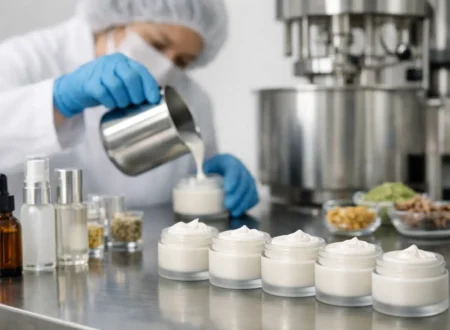
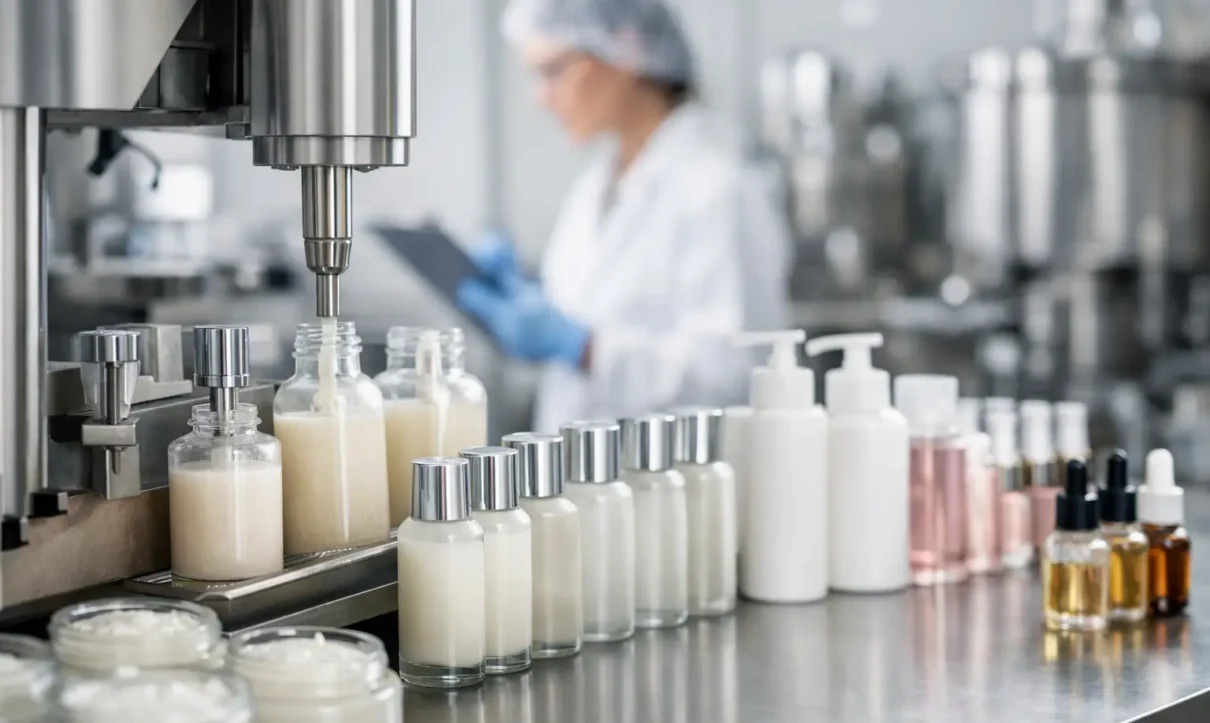
Production includes weighing and batching, filling, labeling, assembly, and packing. The exact duration depends on batch size, product type, packaging format, and current factory schedule. A straightforward run may move efficiently. A more complex project with multiple SKUs or finishing steps can require additional coordination.
Quality control and release
A standards-driven manufacturer does not rush product out the door the moment it is filled. Quality checks are part of the process. These checks help confirm consistency, accuracy, and presentation before goods are prepared for dispatch.
For beauty brands, this is not dead time. It is part of protecting your customer experience. Premium products need premium execution, and that includes disciplined quality control.
What usually causes lead times to stretch
Most timeline blowouts are not caused by one dramatic issue. They come from a series of smaller delays that compound. A founder requests a formula adjustment. Then packaging samples take longer to approve. Then artwork is revised after print files are set up. None of those steps is unusual, but together they move the launch window.
Supply timing is another factor. Some ingredients and components are consistently available, while others depend on longer procurement windows. If your product relies on highly specific packaging, timing becomes less flexible.
Seasonality also plays a role. Before major retail periods or new-year launch cycles, manufacturers and suppliers may be managing heavier demand. That does not mean your project cannot move forward. It means early planning becomes even more valuable.
How to shorten cosmetic manufacturing lead times without cutting corners
The best way to shorten a timeline is not to rush quality checks or skip development steps. It is to reduce avoidable friction.
Start with a focused brief. Be clear on your product category, target customer, packaging style, and how custom you want the result to be. If you are open to using proven packaging formats or existing formulation frameworks, say so early. Flexibility in one area often saves time in another.
Decision speed matters too. Projects move well when sample feedback is consolidated, approvals are prompt, and brand teams avoid revisiting settled choices unless there is a strong reason. Perfectionism can quietly add weeks.
It also helps to work backward from your launch date with a buffer. If you need products ready for a campaign, a retail window, or a distributor presentation, do not aim for completion at the last possible moment. Build in room for revisions and logistics.
Planning your launch around realistic lead times
A strong launch calendar should reflect the reality of cosmetic product development, not just the hoped-for best case. That means leaving time for formulation decisions, packaging arrivals, production scheduling, and final quality release.
If this is your first product, give yourself more room than you think you need. New founders often underestimate how many approvals happen between concept and finished goods. If you are scaling an existing line, lead times may become easier to predict, especially when your formula, packaging, and ordering rhythm are already established.
There is also a strategic choice to make between customization and speed. A fully custom product can create stronger brand distinction, but it often requires a longer runway. A more streamlined approach may get you to market faster. Neither option is automatically better. It depends on your goals, launch window, and budget for development time.
Why the right manufacturing partner changes the timeline experience
A good partner does more than quote a turnaround. They help you see what is driving the schedule, where decisions need to happen, and which parts of the project are most likely to affect timing. That kind of transparency makes planning easier and reduces surprises.
For brand owners, especially those building a line for the first time, that guidance is often as valuable as the manufacturing itself. You want a partner who can translate the process into clear next steps, maintain quality standards, and keep momentum moving without overpromising.
At GlowSense, that balance of precision and collaboration is central to how projects move from concept to finished product. When every stage is handled with care – formulation development, production, and quality control – lead times become more manageable because the process itself is better organized.
The smartest launch plans are not built on guesswork. They are built on clear communication, realistic timing, and a manufacturing partner who understands how to bring your brand’s vision to life without losing sight of quality. If you are planning your next skincare, haircare, or beauty product, contact GlowSense for a free quote or consultation and start with a timeline you can actually build around.