 By
By A great product idea can feel clear in your head and surprisingly messy the moment manufacturing starts. You know the texture you want, the finish, the packaging, the way you want customers to feel when they open it – but turning that vision into a stable, scalable product is where many founders get stuck. That is exactly why a guide to beauty brand manufacturing matters. The right process helps you move from concept to shelf with fewer surprises, better decisions, and a product line built to grow.
For beauty founders, manufacturing is not just about making units. It shapes product quality, brand positioning, margins, lead times, and customer trust. A beautiful label can get someone to try your product once. Consistent performance is what brings them back.
What beauty brand manufacturing really involves
When founders first look into manufacturing, they often think the main decision is private label versus custom formulation. That choice matters, but it is only one part of a much bigger picture. Beauty brand manufacturing includes formulation development, ingredient selection, compatibility testing, packaging coordination, batch production, filling, labeling, and quality control.
Every stage affects the final result. A formula may look excellent in a sample jar, but if it does not hold up in the selected packaging or perform consistently in larger production runs, the launch can become more complicated than expected. This is where an experienced manufacturing partner adds real value. Precision behind the scenes protects the customer experience in the market.
For standard cosmetics such as skincare, haircare, and beauty products, the process should be structured, collaborative, and realistic. Good manufacturing is part science, part operations, and part brand-building.
A practical guide to beauty brand manufacturing decisions
The best manufacturing projects start with clarity. Before discussing ingredients or packaging finishes, define what you are actually building. Is your line intended to feel premium and sensory-led? Is it designed for everyday essentials with broad appeal? Are you launching with one hero product or a tightly edited collection?
These decisions influence everything that follows. Product format, texture, fragrance direction, target customer, and retail positioning all help shape the manufacturing route. If the vision is too vague, development tends to slow down because every decision becomes a moving target.
Step 1: Start with your product strategy
A strong product strategy keeps the project grounded. That means identifying the type of products you want to launch, the role each one plays in the range, and how they fit your brand story. A cleanser, serum, and moisturizer can sound like a simple starting set, but each product needs a clear purpose and a reason to belong.
This stage is also where you think commercially. Founders sometimes chase too many ideas at once, which stretches budget and focus. A tighter range is often stronger, especially for a first launch. It is easier to manufacture well, easier to market, and easier for customers to understand.
Step 2: Choose private label or custom formulation
This is where trade-offs come in. Private label can be a smart route if speed matters and you want a more efficient path to market. It can work especially well when you want proven product bases and a cleaner launch process.
Custom formulation offers more creative control. It gives you room to develop a distinct product identity through texture, finish, ingredient profile, and performance goals. The trade-off is usually more development time, more rounds of refinement, and a deeper decision-making process.
Neither option is automatically better. It depends on your timeline, budget, positioning, and how differentiated the formula needs to be. For some founders, a selective mix works well – perhaps starting with a faster-to-market product while developing a more signature formula in parallel.
Formulation development is where your brand starts to feel real
This is often the most exciting stage because the product begins to move beyond concept boards and into something tangible. But formulation development should not be treated as guesswork or trend chasing. A product has to be appealing, stable, manufacturable, and aligned with your customer expectations.
An experienced chemist looks at more than a wishlist of ingredients. They consider how those ingredients work together, how the formula behaves over time, what texture and appearance are achievable, and whether the formula can be reproduced consistently across batches. That balance matters. A sample that feels luxurious in a small test batch still needs to perform under real production conditions.
This is also where founders benefit from staying focused on the end user rather than trying to include everything. More ingredients do not always mean a better formula. Often, the best products are the ones that feel intentional, elegant, and easy to understand.
Packaging is not just branding
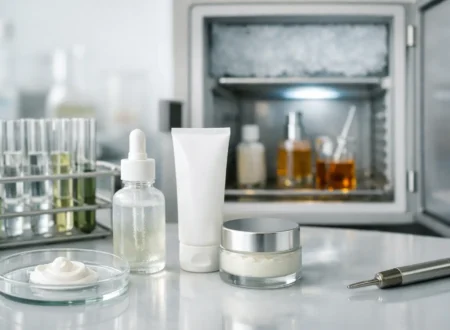
Packaging tends to get attention for aesthetic reasons, and rightly so. It is one of the first things customers notice. But in manufacturing, packaging is also a functional decision. The jar, bottle, tube, or pump must work with the formula inside it.
A rich cream may perform beautifully in one format and become frustrating in another. A serum with a thinner viscosity may require a dispensing solution that controls flow and protects the user experience. Even small choices can affect filling efficiency, product consistency, and presentation.
This is why packaging should be considered early, not after the formula is finalized. Your manufacturer should be looking at compatibility, production practicality, and how the packaging supports your market position. True luxury in every application starts with details that work well, not just details that photograph well.
Production planning is where good ideas become scalable
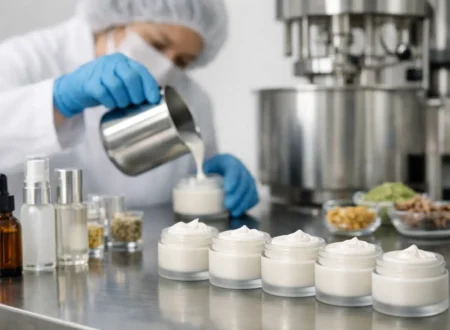
A sample that works in development is only the beginning. Manufacturing at scale requires a disciplined production process with equipment, documented procedures, and quality checks that support consistency from batch to batch.
This matters because customers notice variations. They notice if texture changes, if fill levels look uneven, or if one run feels different from the last. Those details shape trust in your brand.
The strongest manufacturers bring both craftsmanship and process control to production. They are thinking about batching, filling accuracy, labeling standards, and throughput without losing sight of the product experience. Passion matters, but precision is what keeps the brand reliable as volume grows.
Guide to beauty brand manufacturing and quality control
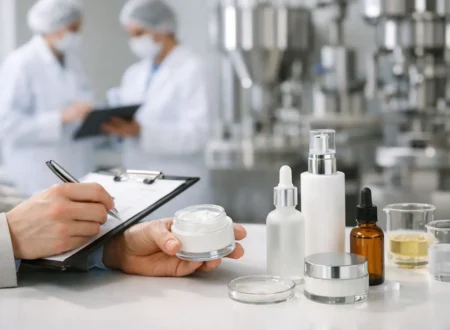
Quality control is one of the least glamorous parts of the process, which is exactly why serious founders should pay close attention to it. If formulation is about creating a product, quality control is about protecting it.
This includes checks across raw materials, batch consistency, appearance, fill, labeling, and finished product standards. A good QA mindset helps prevent small issues from becoming expensive ones later. It also gives founders confidence that the product being shipped reflects the brand they worked so hard to build.
If you are comparing manufacturing partners, ask how they approach consistency and documentation. You do not need every technical detail, but you do need confidence that quality is built into the process rather than checked only at the end.
What founders often underestimate
One common mistake is treating manufacturing like a handoff instead of a partnership. The best outcomes usually come from open communication, realistic timelines, and a shared understanding of the brand goals.
Another is underestimating how many moving parts need alignment. Formula, packaging, artwork, production scheduling, and approvals all interact. A delay in one area can ripple into another. That does not mean the process should feel overwhelming. It means the right manufacturing partner should help organize it.
Founders also sometimes expect every preference to be achievable exactly as imagined. Sometimes it is. Sometimes a texture, packaging choice, or finish needs to be adjusted for stability, performance, or production practicality. That is not a setback. It is part of building a product that works in the real world.
Choosing the right manufacturing partner
The right partner should do more than quote a project. They should help you think clearly, ask the right questions, and guide you toward decisions that support both launch and long-term growth.
Look for a manufacturer that understands formulation, production, and quality control as connected parts of the same process. You want a team that values premium outcomes, but also respects timelines, feasibility, and consistency. If they can translate your vision into practical next steps, that is a strong sign.
For founders across Australia and New Zealand, working with a partner like GlowSense can make the process more focused and far less uncertain. When formulation development, manufacturing, and quality control are handled with care, your brand is in a much stronger position to launch with confidence and scale with control.
If you are building a skincare, haircare, or beauty line and want expert support from concept through production, contact GlowSense for a free quote or consultation. Bring your brand’s vision to life with a manufacturing partner that values precision as much as you value your product.