 By
By Launching a beauty line usually starts with a clear vision – a moisturizer that feels more premium, a hair serum that fits a gap in the market, or a whole product range built around a distinct brand identity. The hard part is turning that vision into shelf-ready products without losing time, quality, or momentum. That is where private label cosmetics make sense for many founders and growing brands.
For some businesses, private label is the fastest path to market. For others, it is a smart way to test demand before investing in more custom development. The value is not just speed. It is having a manufacturing model that helps you build a brand with more confidence, better consistency, and fewer operational headaches.
What private label cosmetics actually mean
Private label cosmetics are beauty and personal care products manufactured by a specialist partner and sold under your brand name. That can include skincare, haircare, and other standard cosmetic products, with options that range from ready-to-brand bases to more tailored formulation work depending on the manufacturer.
This is where many brand owners get confused. Private label does not always mean generic or cookie-cutter. In practice, there is a spectrum. Some projects begin with proven base formulas and focus on packaging, fragrance, texture, or finish. Others move closer to custom development, where the formula is refined to better match your market position, target customer, and product story.
That flexibility matters. A startup may want to move quickly with a tight launch plan, while an established brand may need a more differentiated product line that still benefits from efficient manufacturing. The right path depends on your timeline, your product goals, and how much customization your brand truly needs.
Why brands choose private label cosmetics
The biggest reason is efficiency. Building products from scratch takes time, testing, coordination, and technical oversight. Private label cosmetics can shorten that process because the manufacturing framework is already in place. You are not trying to piece together formulation, production, filling, and quality control through multiple suppliers.
There is also a quality advantage when you work with an experienced manufacturing partner. Consistency is one of the first things customers notice, especially when they repurchase. Texture, scent, fill level, appearance, and performance all need to feel dependable from batch to batch. That is difficult to achieve without disciplined production systems.
For founders, private label can also reduce the learning curve. You still need a clear brand strategy, but you do not need to become a cosmetic chemist or supply chain manager overnight. A strong manufacturing partner helps translate your concept into a product that is realistic to produce and ready to scale.
Where private label works best
Private label is often a strong fit when speed matters. If you want to enter the market with a focused range and start building traction, it can help you launch without waiting through a long development cycle. It is also useful when you are expanding into adjacent categories, such as adding body care to a skincare brand or introducing a complementary haircare line.
It also works well for market testing. Not every idea needs a ground-up formula on day one. Sometimes the smarter move is to launch with a strong, professionally made product, validate demand, and then expand or refine based on customer response.
That said, private label is not automatically the right answer for every concept. If your brand promise depends on a highly specific formula profile or a unique product innovation, a more custom route may be worth the extra time. Good strategy starts with being honest about what your customers will actually notice and what will genuinely set your brand apart.
Choosing the right manufacturing partner
A private label product is only as strong as the partner behind it. The best manufacturer is not just someone who fills jars and bottles. They should be able to guide formulation decisions, advise on packaging compatibility, maintain high production standards, and support your brand as it grows.
That partnership approach is especially important for founders who are still shaping their range. You may start with a rough concept, a mood board, or a gap you see in the market. An experienced team can help refine that into a commercially viable product line with the right textures, claims positioning, packaging format, and manufacturing flow.
Ask practical questions. How do they handle quality control? Can they support both new launches and repeat production runs? Do they understand the difference between a product that looks good online and one that performs reliably in real-world use? These details affect your brand more than flashy sales language ever will.
For Australian brands, working with a local manufacturer can add another layer of control and convenience. Communication is easier, timelines are often more manageable, and it is simpler to align on packaging, production planning, and product reviews when your partner understands the local market.
The role of formulation, packaging, and quality control
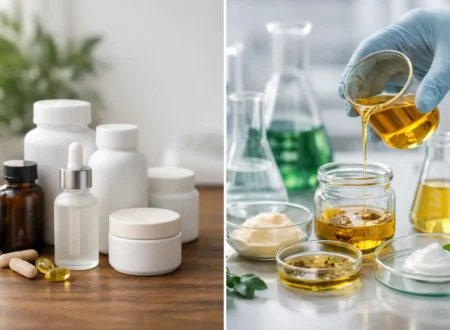
Strong private label cosmetics are never just about choosing a formula from a catalog. The product has to make sense as part of your full brand experience. That includes texture, fragrance direction, ingredient story, packaging look and feel, and how the product performs once it reaches your customer.
Formulation matters because the product has to reflect your positioning. A premium brand needs sensory appeal. A simple everyday line needs clarity and reliability. A trend-driven product needs to feel current without chasing every short-term fad. The right formulation process balances creativity with manufacturability.
Packaging matters just as much. A great formula can be undermined by the wrong jar, bottle, pump, or label finish. Packaging affects usability, presentation, and perceived value. It also affects production efficiency, which is why good manufacturers help assess compatibility early rather than fixing problems later.
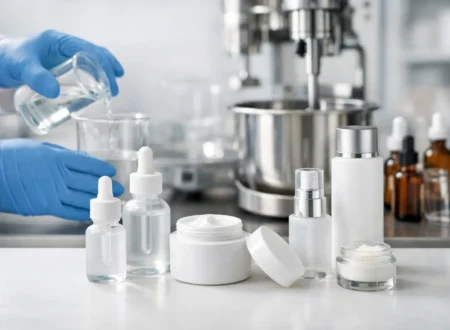
Then there is quality control, which is where real trust is built. Beauty customers may discover your brand through design or marketing, but they stay because the product delivers a consistent experience. Strict QA processes help protect that consistency as you move from samples to larger production runs.
How to approach your launch with clarity
If you are planning a private label launch, start with the brand before the product list. What do you want to be known for? Who are you serving? What does your customer expect the first time they use your product? Those answers should shape your decisions more than trends alone.
From there, narrow your launch range. Many early brands try to release too many products at once. A smaller, more focused lineup is often stronger. It is easier to market, easier to manage, and easier for customers to understand. One excellent cleanser, serum, and moisturizer can do more for a new brand than a crowded catalog with no clear point of view.
You should also think ahead. Even if you launch with a simple range, choose a manufacturing partner who can support future growth. Scaling is smoother when the same team can help you maintain quality, introduce new products, and refine what is already working.
At GlowSense, that is the value of a true end-to-end partnership. From formulation development to production and quality control, the goal is not just to make products. It is to help brand owners bring their vision to life with precision, consistency, and the kind of craftsmanship that supports long-term growth.
Private label cosmetics and long-term brand building
There is a misconception that private label is only for brands looking for a quick launch. In reality, it can be part of a serious long-term strategy. Many successful beauty brands start with a practical, high-quality foundation and evolve over time as customer demand becomes clearer.
What matters most is how intentionally you use the model. If you treat private label as a shortcut with no real brand thinking behind it, the results will feel forgettable. If you use it as a disciplined path to market – supported by the right formulations, packaging choices, and quality standards – it becomes a smart way to build momentum without compromising on quality.
The beauty market rewards brands that are clear, consistent, and well executed. Private label cosmetics can help you get there faster, but only when the work behind the scenes matches the promise on the label.
If you are ready to create a product line that feels premium, performs consistently, and supports real brand growth, contact GlowSense for a free quote or consultation. Your next launch should feel like a confident step forward, not a guess.