 By
By A founder is ready to launch a face serum, has the branding direction mapped out, and knows the market they want to reach. Then the manufacturer asks about volumes, batch sizes, and packaging counts. That is usually the moment when minimum order quantity stops feeling like a technical detail and starts shaping the entire launch plan.
If you are searching for a minimum order quantity cosmetic manufacturer, you are really trying to answer a bigger question: how much product do I need to commit to in order to launch well, protect cash flow, and still leave room to grow? The right answer is rarely the lowest number on paper. It depends on formulation complexity, packaging choices, production efficiency, and how serious you are about building a brand that can scale.
What a minimum order quantity cosmetic manufacturer is really assessing
Minimum order quantity, or MOQ, is the smallest production volume a manufacturer will accept for a given product. In cosmetics, that number is not chosen at random. It reflects the real work involved in sourcing raw materials, setting up equipment, running quality checks, filling units, and coordinating packaging.
A minimum order quantity cosmetic manufacturer is balancing two things at once. The first is operational efficiency. Production runs need to make sense from a manufacturing standpoint, especially when premium ingredients, specialized textures, or custom packaging are involved. The second is your brand’s commercial reality. Startups and growing brands need flexibility, but the product still has to be manufactured with consistency and care.
This is why MOQ conversations are more strategic than many founders expect. They are tied to how your product is built, not just how many units you want to buy.
Why cosmetic MOQs vary so much
Two moisturizers can look similar on a shelf and still require very different minimums behind the scenes. The main reason is that cosmetic manufacturing involves more moving parts than most new brands realize.
Formula type changes the production equation
A straightforward lotion or cleanser may be simpler to batch than a product with a more specialized texture, a high-performance ingredient profile, or specific sensory requirements. Custom formulas often involve additional development work, testing, and tighter process control. That can influence the minimum run size because the manufacturer needs a batch large enough to produce the formula consistently.
Packaging can drive MOQ more than the formula
Founders often focus on the product inside the bottle, but packaging is frequently where MOQ pressure shows up first. Custom bottles, pumps, droppers, jars, printed tubes, and decorated cartons may each come with their own supplier minimums. Even when the filling quantity is manageable, packaging components may require a larger commitment.
This is one of the biggest trade-offs in early-stage brand building. Premium presentation matters, but highly customized packaging can raise the threshold for launch.
Manufacturing efficiency matters
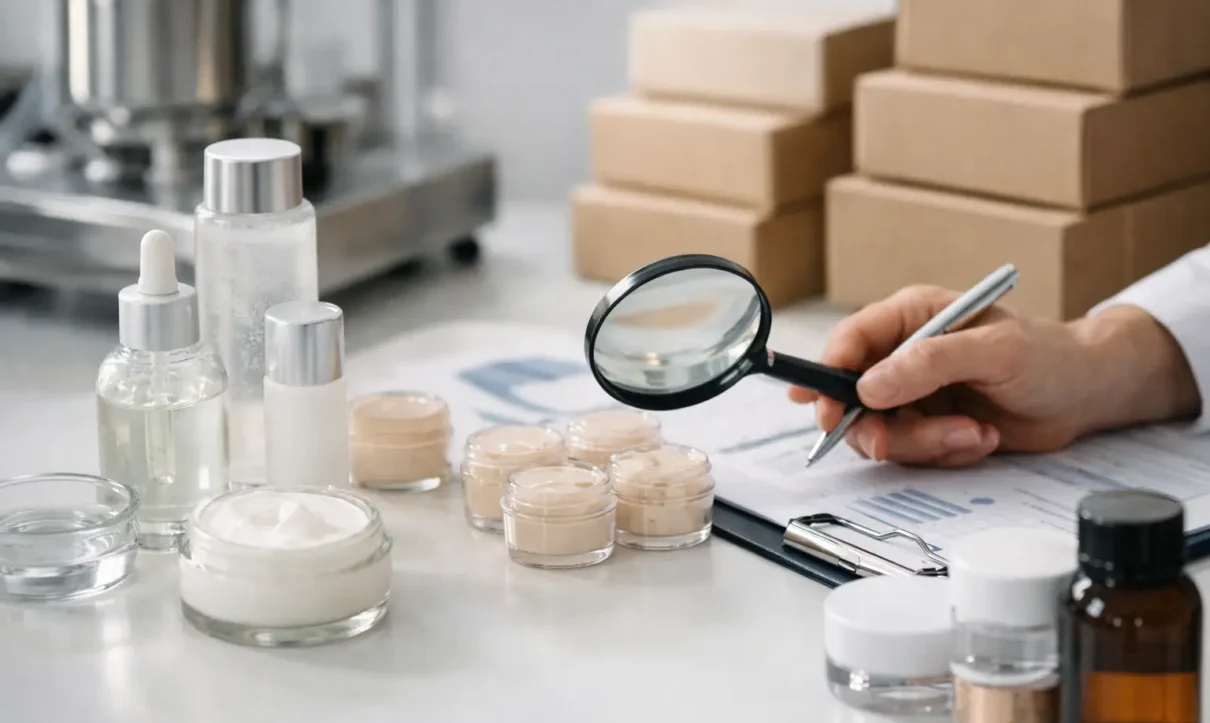
Every production run requires setup time, sanitation, filling line preparation, labeling coordination, and quality assurance. For a manufacturer, very small runs can absorb nearly the same effort as larger ones while producing fewer sellable units. That is why MOQ is often tied to practical factory efficiency, not just willingness to accommodate smaller brands.
Ingredient sourcing affects flexibility
Some raw materials are readily available in manageable quantities. Others are purchased in larger supply lots or have lead times that make very small custom runs inefficient. If your formula uses specialty ingredients, that can shape what is realistic.
How to think about MOQ as a brand owner
It is easy to treat MOQ as a hurdle. A better approach is to treat it as a planning tool.
The first question is not, “What is the lowest possible MOQ?” It is, “What production volume gives my brand the best chance to launch with confidence?” If your order is too small, you may face stock pressure quickly, limited room for marketing momentum, and higher per-unit costs tied to short-run inefficiencies. If your order is too large, you may tie up cash in inventory before the market has validated the product.
That middle ground is where smart planning lives. A good manufacturing partner will help you evaluate forecasted demand, launch timing, hero products, and packaging strategy so your initial run supports growth rather than strain.
Choosing a minimum order quantity cosmetic manufacturer
Not every manufacturer is the right fit for every stage of brand growth. MOQ is one signal, but it should never be the only one you use.
Look beyond the headline number
A low MOQ can sound attractive, but it does not automatically mean better value. You also need to understand what comes with it. Are you working from an existing private label base or developing a custom formula? How much flexibility do you have with packaging? What level of support is included in the process?
A stronger partnership often comes from transparency rather than promises. You want a manufacturer that explains why certain volumes make sense and where the real cost drivers sit.
Ask how the manufacturer supports scaling
Your first production run is only the beginning. If your product performs well, the manufacturer should be able to support repeat orders, growing volumes, and future line extensions without sacrificing consistency. A partner with modern equipment, disciplined quality control, and experienced formulators can make that transition smoother.
This matters because the wrong fit at launch can force a painful change later. Reformulating, switching packaging systems, or moving production after early success can create avoidable disruption.
Pay attention to communication style
Founders do not just need manufacturing capacity. They need clarity. If a manufacturer explains MOQ, formulation options, packaging realities, and lead times in a way that feels practical and collaborative, that is a strong sign. Cosmetic development is full of choices, and clear guidance helps you make better ones.
When lower MOQ is helpful and when it is not
There are times when a lower minimum is exactly the right move. If you are testing a focused launch, introducing a new category, or validating a concept with a carefully chosen product range, smaller runs can reduce risk and preserve capital.
But lower is not always better. A very small run can limit packaging choices, increase unit economics, and create pressure to reorder before you have enough time to evaluate performance properly. It can also restrict your ability to support wholesale opportunities or broader retail plans.
That is why MOQ decisions should connect to your business model. A direct-to-consumer starter brand may need a different approach than a salon-focused line, a boutique retailer concept, or an established beauty brand expanding into a new format.
How experienced manufacturers help you manage MOQ wisely
The best manufacturing relationships are consultative, not transactional. They help you align product ambition with practical production choices.
For example, a founder may want fully custom packaging, multiple shades or variants, and a broad launch assortment. A good partner can help simplify that plan into a stronger first step – perhaps starting with a hero SKU, selecting packaging with better supply flexibility, or sequencing the range in phases. That does not dilute the brand vision. It protects it.
This is where end-to-end support becomes valuable. When formulation development, production, and quality control are handled through one experienced partner, MOQ discussions tend to become clearer. Each decision connects back to what can be produced consistently, presented beautifully, and scaled responsibly.
For Australian brand owners, working with a local contract manufacturing partner can also improve visibility across development, timelines, and repeat ordering. GlowSense supports skincare, haircare, and beauty brands with a collaborative manufacturing approach designed to bring brand vision and production precision into the same conversation.
Questions to ask before you commit
Before choosing a minimum order quantity cosmetic manufacturer, it helps to ask a few practical questions. Is the MOQ tied mainly to formula, packaging, or both? Can the product be developed in a way that supports your current stage without limiting future growth? What level of quality control is built into the process? And if demand increases, how easily can production scale?
The answers will tell you far more than a simple MOQ figure ever could. They show whether the manufacturer is thinking about your product as a short run or as the beginning of a brand.
Strong cosmetic manufacturing is always a balance of creativity and control. You want enough flexibility to shape a product that feels true to your market, and enough structure to ensure consistency, quality, and long-term viability. MOQ sits right at the center of that balance.
If you are planning your next cosmetic launch and want guidance that is both practical and brand-focused, contact GlowSense for a free quote or consultation and bring your brand’s vision to life with confidence.