 By
By A beautiful jar can win attention in a second and still create problems six weeks later if the formula inside starts losing stability, leaking in transit, or frustrating customers during use. That is why packaging decisions in skincare are never just about appearance. For brand founders, packaging is product performance, customer experience, and margin protection all at once.
If you are working out how to choose packaging for skincare products, the smartest place to start is not with trends. It is with the formula itself, the way your customer will use it, and the stage your brand is in right now. The best packaging is the option that protects the formula, fits the positioning of your brand, and still makes sense when it is time to scale.
How to choose packaging for skincare products from the formula out
The formula should lead the packaging conversation, not the other way around. A lightweight serum, a rich body butter, and a clay mask all behave differently, and each one has different packaging needs. Texture, viscosity, sensitivity to air, sensitivity to light, and the dispensing method all matter.
For example, products with active or delicate ingredients often benefit from packaging that limits exposure to air and fingers. Airless pumps can be a strong choice here because they support product integrity and create a premium user experience. On the other hand, a thick balm may not dispense well through a pump, so a jar or tube may be more practical. That trade-off matters. Jars can feel luxurious and work well for dense textures, but they also expose the product each time they are opened.
Material compatibility is just as important. Some formulations perform better in specific packaging materials, and some fragrance or oil-heavy products can interact with certain plastics over time. This is where experienced manufacturing guidance becomes valuable. What looks right on a mood board may not be the best long-term fit in production.
Your packaging has to match how the product is used
Founders often focus on shelf appeal first, but daily use is what customers remember. If the packaging makes the routine awkward, messy, or inconsistent, it can weaken even a strong formula.
Think about where and how the product will be used. A cleanser used in the shower needs different packaging from a facial oil applied at a vanity. A travel-friendly hand cream should be easy to squeeze and cap securely. A nightly serum should dispense in controlled amounts. Good packaging supports the ritual.
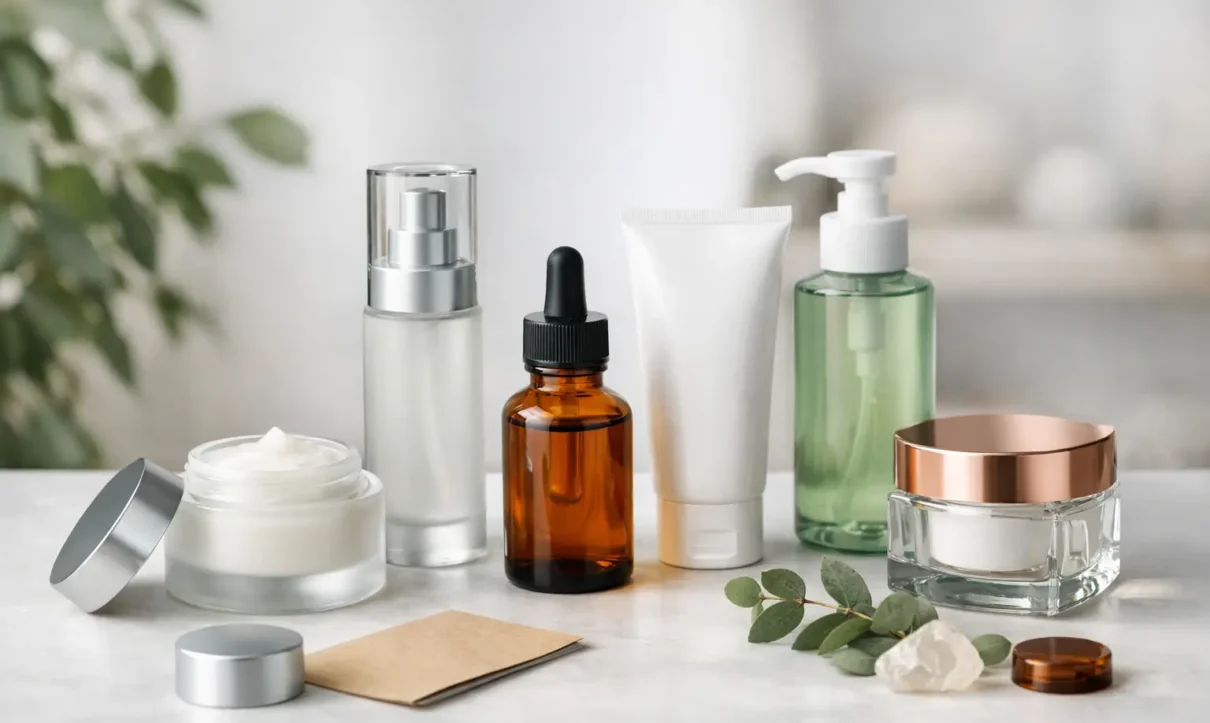
The right format often comes down to practical use:
Pumps
Pumps work well for lotions, serums, and creams that benefit from controlled dispensing. They feel polished and often reduce waste. They can, however, add cost and complexity depending on the component.
Tubes
Tubes are efficient, portable, and easy for customers to use. They are a strong option for cleansers, masks, moisturizers, and hand products. They may feel less prestige-driven than some glass options, but they often perform better in real life.
Jars
Jars can create a high-end look, especially for rich creams and masks. They are also easy to fill and easy for customers to access fully. The trade-off is repeated exposure to air and direct contact during use.
Droppers
Droppers suit facial oils and some treatment-style serums, particularly when precise application is part of the experience. They can look elevated, but they are not always the best fit for every viscosity or every customer. Some users love the ritual. Others find droppers slow or messy.
Packaging is part of your brand position
Customers do not separate the formula from the pack. They experience both together. If your brand promises elevated, results-driven skincare, the packaging should reinforce that message from the first touch.
This does not mean every product needs heavy glass and elaborate decoration. Premium is not the same as expensive-looking. It is about alignment. A minimalist, modern brand may be better served by clean lines, consistent labeling, and functional components that feel precise. A playful, youth-focused line may lean into softer shapes, bright color, and easy everyday usability.
When deciding how to choose packaging for skincare products, ask what your pack says before anyone reads the label. Does it feel clinical, luxurious, natural, modern, simple, giftable, or mass-market? None of those are wrong. The problem is mismatch. If your formula, brand story, and packaging all send different signals, the product feels less convincing.
Consistency across the range matters too. One hero product in premium packaging can attract attention, but a cohesive lineup builds brand recognition. Customers should be able to spot your range and understand the value level immediately.
Cost matters, but so does the hidden cost of the wrong choice
Packaging decisions affect far more than unit presentation. They shape filling efficiency, freight, breakage risk, storage, and reorder flexibility. This is where founders can get caught between brand ambition and commercial reality.
Glass, for example, can communicate quality and weight, but it is heavier to ship and more vulnerable in transit. Custom components can make a product line stand out, but they also tend to require longer lead times and more planning. Highly specialized packaging may be perfect for a mature brand with stable volume, yet create friction for a young business still testing the market.
There is no single right answer here. Sometimes a standard component with a custom label and strong secondary packaging is the smartest move early on. It allows you to launch with confidence, protect quality, and preserve flexibility while your brand gains traction. As you grow, you can refine and elevate the packaging architecture.
Good packaging strategy balances what customers see with what operations can support.
Test for scale, not just samples
A packaging sample can look excellent in a hand and still underperform in production. That is why packaging should be evaluated in the real conditions your product will face. Filling, labeling, shipping, storage, and end use all reveal issues that a first impression can miss.
Ask practical questions early. Does the pump deliver the right amount consistently? Does the tube recover its shape after repeated use? Will the label stay clean in a humid bathroom? Is the closure secure enough for shipping? Does the bottle sit well in a set or gift box? These details shape customer satisfaction more than founders sometimes expect.
This is also where partnership matters. An experienced manufacturing team can help flag component risks before they become expensive mistakes. At GlowSense, that collaborative approach helps founders connect packaging choices to formulation, production efficiency, and long-term brand growth. The strongest launches usually come from teams that think about packaging as part of the full product system, not as a final decorative step.
Compliance and clarity still need attention
Even the best-looking pack has to make room for the essentials. Your label layout needs to support clear product identity, usage directions, ingredient listing, and other standard cosmetic information relevant to your market. If the packaging shape leaves too little space, the result can feel cramped or confusing.
This is another reason simple formats often outperform more unusual shapes. Distinctive packaging can help with shelf presence, but it should not create avoidable labeling challenges or compromise readability. Clean communication supports trust, especially for a new brand.
Choose for the brand you are building next
One of the most useful ways to make a packaging decision is to think beyond launch day. Will this format still suit your line if you add more SKUs? Can it support a family of products with a consistent look? Will it still feel right when your volumes increase and your retail opportunities broaden?
Founders do not need to get everything perfect at the start. They do need packaging that supports where the brand is heading. A smart first choice leaves room to grow. It protects the formula, reflects the brand, works in production, and creates a user experience customers want to repeat.
The best skincare packaging is rarely the flashiest option. It is the one that makes the product feel credible, enjoyable, and ready for the market you want to win.
If you are planning your next launch and want expert guidance on formulation, manufacturing, and packaging selection, contact GlowSense for a free quote or consultation. Bring your brand’s vision to life with a partner built for precision, performance, and premium skincare that feels right from the first impression to the last pump.