 By
By The wrong manufacturer rarely looks wrong at the start. The samples seem promising, the emails are quick, and the pitch sounds polished. Then the real pressure begins – revisions drag on, quality feels inconsistent, or the process suddenly becomes far less collaborative than you expected. If you are figuring out how to choose cosmetic manufacturer partners for your brand, the real job is not just finding someone who can make a product. It is finding a partner who can help you build a brand that lasts.
For skincare, haircare, and beauty founders, that decision shapes almost everything that follows. Your product quality, launch timeline, ability to scale, and customer experience all connect back to the manufacturer behind the scenes. A good fit gives you confidence. A poor fit creates friction at every stage.
How to choose cosmetic manufacturer for your brand
Start with the kind of business you are trying to build, not just the kind of product you want to launch. A startup with one hero SKU has different needs than an established brand expanding into new categories. Some manufacturers are set up for straightforward private label production. Others are better suited to custom formulation, line extensions, or ongoing product development.
That distinction matters because the best manufacturer is not the one with the broadest claims. It is the one whose process, capabilities, and working style fit your goals. If you want a highly customized formula, you need a team with real formulation depth and a clear development process. If speed to market is your priority, a more streamlined path may be the better match. It depends on where your brand is now and what you want the next 12 to 24 months to look like.
A reliable cosmetic manufacturer should be able to explain how they support product development, production, quality control, and scale. If those answers are vague, overly sales-driven, or hard to pin down, treat that as useful information.
Look beyond the sample and ask how the process works
A sample can tell you whether you like the texture, scent, or finish. It cannot tell you whether the manufacturer runs a disciplined operation. That is why process matters so much.
Ask what happens from brief to final production. How are formulas developed or refined? How are revisions handled? What does the approval process look like? How are quality checks managed during manufacturing? A strong partner can walk you through each stage clearly, without hiding behind jargon.
You are not looking for perfection. You are looking for consistency, transparency, and control. Premium products are built through repeatable systems, not guesswork. If a manufacturer cannot explain how they maintain batch consistency or manage production standards, you may end up spending more time solving problems than growing your brand.
This is also where communication becomes a deciding factor. Fast replies are helpful, but clarity is better. A manufacturer who asks smart questions about your market, positioning, packaging, and formula expectations is usually showing you how they will work once the project is live. That consultative mindset is often what separates a supplier from a true development partner.
Formulation capability matters more than buzzwords
Many founders get pulled toward trend language early on. Clean, glow, luxury, minimalist, high performance – all of that can shape the brand story, but none of it replaces technical formulation capability.
If your product needs to stand out, ask how the manufacturer approaches custom formulation. Do they have experienced chemists involved in development? Can they adapt textures, finishes, and ingredient profiles to suit your brief? Can they guide you toward practical decisions that support performance, stability, and manufacturability?
There is a trade-off here. The more customized the formula, the more development work may be needed. That can be worth it if product differentiation is central to your brand. But if you need to move quickly, a manufacturer that can offer a smart balance of customization and speed may be the better fit. The right answer is not always the most complex one.
Quality control should be easy to understand
Quality assurance is one of those topics that can sound impressive without actually telling you much. What you want is a straightforward explanation of how standards are maintained.
Ask how raw materials are handled, how production runs are checked, and what steps are in place to support product consistency. You do not need a chemistry degree to evaluate this. You simply need to know whether the manufacturer treats quality as a core operating discipline or as a box to check.
A dependable cosmetic manufacturer should make you feel that precision is built into the process from the start. That includes clean production practices, modern equipment, documented procedures, and a clear commitment to consistency and safety at scale. For founders trying to build trust with retailers or direct customers, that foundation matters just as much as branding.
Packaging support can save time and headaches
Many new brand owners focus almost entirely on the formula, then realize late in the process that packaging affects everything from fill compatibility to lead times to overall presentation. That is why packaging should be part of the manufacturer conversation early.
Ask whether the manufacturer can help align formula and packaging choices. A beautiful pack format still has to work in production and suit the product inside. Pumps, jars, tubes, closures, viscosity, and fill performance all need to make sense together.
If your manufacturer can support that coordination, the process usually runs more smoothly. If not, you may be left managing multiple moving parts on your own. That does not mean a separate packaging route is wrong. It just means you need to understand how much project management will sit with you.
Choose a manufacturer that can grow with you
One of the most overlooked parts of how to choose cosmetic manufacturer partners is thinking beyond launch. A manufacturer may be a great fit for a first run but not for what happens next.
Ask what support looks like when you want to reorder, increase volume, refine a formula, or expand into adjacent categories. Can they handle growth without compromising consistency? Do they seem equipped for both small brand beginnings and more established production needs?
This is especially important if you are building a long-term brand rather than testing a short-term idea. Switching manufacturers later can be disruptive. It may affect timelines, formulation continuity, packaging compatibility, and internal documentation. Choosing a partner with room to grow often saves a great deal of friction later.
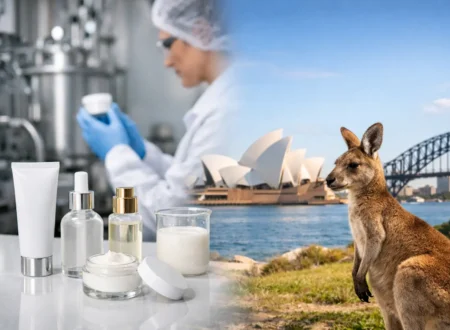
It is also worth considering location when it genuinely affects service and logistics. For brands in Australia and New Zealand, working with an Australian manufacturer can make communication, freight coordination, and project visibility far easier. If you value close collaboration and practical access to your manufacturing partner, that local advantage is real.
Red flags are usually obvious in hindsight
Most founders can spot a bad fit after the fact. The better move is to notice the signals early.
Be cautious if responses feel evasive, if timelines are discussed loosely, or if every answer sounds designed to close the deal rather than clarify the work. The same goes for manufacturers who seem uninterested in your brand positioning, target customer, or product goals. If they do not care about the brief now, they are unlikely to become more invested once production starts.
Another subtle red flag is overpromising. Good manufacturers know where complexity lives. They are honest about development time, revision cycles, and the practical realities of production. That honesty is not a weakness. It is usually a sign of operational maturity.
The best fit feels collaborative, not transactional
When founders ask how to choose cosmetic manufacturer partners, they often expect a checklist. Certifications, capabilities, lead times, categories, packaging options. Those details matter, but they are only part of the decision.
The stronger question is this: who do you trust to translate your brand vision into a finished product with care, precision, and consistency?
The best manufacturing relationships feel collaborative from the beginning. You feel heard. You get clear answers. The team understands both the creative side of brand building and the discipline required to manufacture well. They help you make smarter decisions, not just faster ones.
That is where real momentum starts. A thoughtful manufacturing partner can help bring your concept into focus, sharpen product quality, and support the kind of growth that feels stable rather than rushed. GlowSense works with beauty founders and established brands to develop, manufacture, and refine premium cosmetic products with precision and partnership at every step. If you are ready to bring your brand’s vision to life, contact GlowSense for a free quote or consultation.