 By
By A product can look beautiful on the shelf and still fail where it matters most – texture, fill accuracy, stability, batch consistency, or packaging performance. That is why a strong guide to cosmetic quality control matters for any beauty brand planning to launch, grow, or protect its reputation.
For founders, quality control is not just a factory task checked off at the end of production. It shapes how your moisturizer feels in winter, whether your cleanser stays uniform after shipping, and whether your packaging performs the same way from one production run to the next. If you want customers to trust your brand, quality has to be built in from the first formulation discussion.
What cosmetic quality control really covers
When brand owners hear quality control, they often think of final product inspection. In practice, it starts much earlier. Quality control in cosmetics includes checking raw materials, monitoring how a formula is made, confirming the finished product matches specifications, and making sure packaging works with the formula inside it.
That broader view matters because cosmetic issues rarely begin at one single point. A texture change might come from raw material variation. A leaking bottle may be a packaging compatibility issue rather than a filling issue. A slight shift in fragrance or color may be acceptable in some formulas but a warning sign in others. Good quality control is about catching those differences before they become customer complaints.
For skincare, haircare, and beauty products, the goal is consistency. Customers expect the same sensory experience every time they repurchase. If batch one feels silky and batch three feels heavy, trust starts to erode, even if the formula is technically close.
A practical guide to cosmetic quality control at each stage
The strongest quality systems work in layers. Instead of relying on one final check, experienced manufacturers build quality into every stage of development and production.
Raw materials set the standard
Every finished product starts with incoming ingredients and packaging components. If those inputs are inconsistent, the final product will be too. This is why ingredient verification, supplier documentation, and incoming goods checks matter so much.
For a brand owner, this means asking a simple question early – how are your materials checked before they ever reach the mixing vessel? Premium ingredients are only part of the story. They also need to be handled, identified, and approved correctly. The same applies to jars, pumps, tubes, and labels. A great formula can still underperform if the packaging does not meet spec.
There is always some nuance here. Not every natural or botanical input behaves identically from batch to batch, and some variation can be normal. The key is knowing what is acceptable, what needs adjustment, and what should be rejected.
Formulation development is a quality decision
Many brands treat formulation as a creative stage and quality control as a manufacturing stage. In reality, those two are tightly connected. A formula should not only match your brand vision. It also needs to be manufacturable, stable, and repeatable.
This is where experienced chemists make a real difference. They assess how ingredients interact, how the product behaves over time, and whether the formula can hold up under normal storage and handling conditions. A luxurious texture on day one is not enough. The product needs to maintain performance through filling, shipping, warehousing, and regular customer use.
Sometimes founders want a very specific feel, finish, or appearance that pushes a formula closer to its limits. That is not necessarily a problem, but it does mean more care is needed in development. Premium positioning and quality control should support each other, not compete.
In-process checks keep production on track
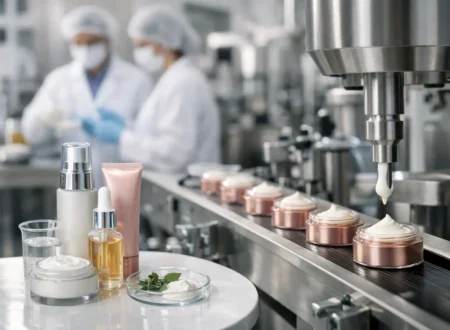
Once manufacturing begins, quality control shifts into active monitoring. This stage includes checks such as batch weights, mixing times, temperatures, appearance, viscosity, and fill volume, depending on the product type.
These in-process checks are essential because they help teams spot small deviations before they become expensive ones. A batch that looks slightly different halfway through production may still be corrected. A batch that is only reviewed after filling is much harder to manage.
For brand owners, this is one of the clearest signs of a disciplined manufacturing partner. Quality should not rely on luck or memory. It should be documented, repeatable, and followed with care.
Finished product inspection is the final filter
Before products are packed out or released, finished goods need to be checked against agreed specifications. That can include appearance, odor, texture, color, pH, fill weight, labeling accuracy, and packaging presentation.
This final review confirms that the product customers receive is aligned with the product that was approved. It is also where presentation matters. Premium brands are judged not just by performance, but by visual consistency. Crooked labels, scratched jars, poor seals, or messy fills can undermine an otherwise strong formula.
There is a practical balance here. Not every variation is a failure, and experienced teams know how to distinguish harmless cosmetic variation from a true quality concern. That judgment matters just as much as the checklist.
Why packaging is part of cosmetic quality control
Packaging is often underestimated by new founders. It is easy to focus on branding, shape, and shelf appeal, then assume the technical side will sort itself out. In reality, packaging compatibility is a core part of quality control.
Different formulas behave differently in pumps, droppers, jars, tubes, and bottles. A thick cream may not dispense cleanly through a pump. A lightweight serum may leak if the closure is not right. Decoration and labeling also need to hold up through handling and transport.
This is one reason cosmetic quality control is never only about the formula. Product and packaging need to perform as one complete system. When they do, the customer experience feels effortless. When they do not, even a beautiful brand can look unfinished.
Documentation matters more than most founders expect
A reliable quality process is not just about what a manufacturer checks. It is also about what is recorded. Clear documentation supports consistency across batches, helps track changes, and gives brand owners more confidence as they scale.
This does not mean founders need to become technical specialists. It does mean you should value partners who can explain their process clearly and maintain disciplined records throughout development and production. If a product needs refining over time, documentation is what makes smart improvements possible instead of guesswork.
For growing brands, this becomes even more valuable. What works for a small launch run may need tighter controls as order volume increases. A manufacturer with strong systems can help you scale without losing the qualities that made the product successful in the first place.
Common quality control gaps that slow down launches
Many delays happen before a product ever reaches the market. Often, the issue is not poor intent. It is a gap between brand expectations and manufacturing reality.
One common problem is approving a formula without enough attention to long-term performance. Another is selecting packaging based mainly on appearance without considering compatibility. Some founders also assume that if a sample looks good, large-scale production will behave exactly the same way. Sometimes it does. Sometimes it needs adjustment.
This is where a collaborative manufacturing partner adds real value. Good quality control is not just about saying no. It is about asking the right questions early, refining where needed, and helping brand owners make informed decisions that support both launch speed and product integrity.
Choosing a manufacturing partner with strong quality standards
If you are comparing cosmetic manufacturers, ask how quality is managed across development, production, filling, and packaging – not just at the end. The right partner should be able to talk confidently about process control, batch consistency, specification checks, and how they support repeatable results.
You also want a team that understands the commercial side of quality. Overengineering every detail can slow timelines and add complexity. Underchecking can create avoidable risk. The best approach is thoughtful, practical, and aligned with your product category, brand positioning, and growth plans.
At GlowSense, that balance sits at the heart of how we support beauty brands. Precision matters, but so does partnership. When quality is built into every step, founders can move forward with more clarity and confidence.
A well-made cosmetic product should feel consistent, polished, and worthy of repeat purchase long before a customer ever thinks about how it was manufactured. If you are ready to bring your brand’s vision to life with a partner who values craftsmanship and control, contact GlowSense for a free quote or consultation.