 By
By Most beauty founders do not get stuck on the idea. They get stuck in the handoff between idea and execution. A cleanser sounds simple until you need the texture to feel premium, the packaging to suit the formula, and every batch to come out consistent. That is where a practical guide to cosmetic manufacturing process becomes useful – not as a factory diagram, but as a real-world map for building a product line that can launch and grow.
For brand owners, the manufacturing process is not just about making product. It shapes cost, quality, speed to market, customer experience, and whether your brand can scale without losing what made it appealing in the first place. If you understand the stages, you make better decisions, ask better questions, and choose a manufacturing partner with more confidence.
What the cosmetic manufacturing process actually includes
The cosmetic manufacturing process starts well before ingredients enter a mixing vessel. It begins with product intent. What are you making, who is it for, how should it feel on the skin or hair, and what position should it hold in the market? A lightweight gel moisturizer for a trend-driven skincare line requires a very different formulation path than a rich body butter or a smoothing hair mask.
From there, the process usually moves through formulation development, raw material sourcing, lab sampling, compatibility checks, production planning, bulk manufacturing, filling, packaging, quality control, and final release. These stages are connected. A decision made early, such as choosing an airless pump over a jar, can affect viscosity targets, filling methods, and even stability performance over time.
That is why strong cosmetic manufacturing is equal parts creativity and control. You want room to build something distinctive, but you also need disciplined systems that keep the final product consistent.
Step 1: Start with the product brief
Every successful project begins with a clear brief. This is where a founder translates a brand idea into manufacturing terms. You may know you want a glow serum or a creamy cleanser, but your manufacturer needs more detail. They need to understand product type, target customer, desired finish, fragrance direction, packaging format, and launch timing.
This stage matters because vague briefs usually create delays later. If the product goal keeps changing during development, samples take longer, packaging choices become harder, and production planning gets less predictable. A good manufacturing partner will help sharpen the brief, but the more clarity you bring at the start, the smoother the path tends to be.
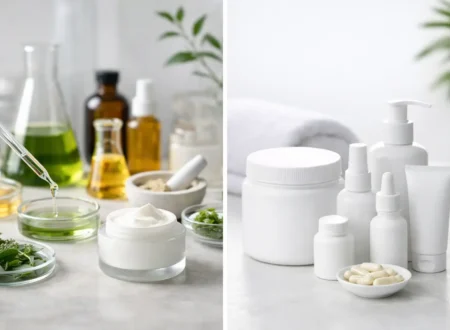
For newer brands, this is also the stage where private label and custom formulation get separated. Private label can be faster if you want a proven base formula with your own branding. Custom development takes more time but gives you greater ownership over texture, sensory profile, and positioning. Neither option is automatically better. It depends on your timeline, budget range, and how differentiated the product needs to be.
Step 2: Formulation development and sampling
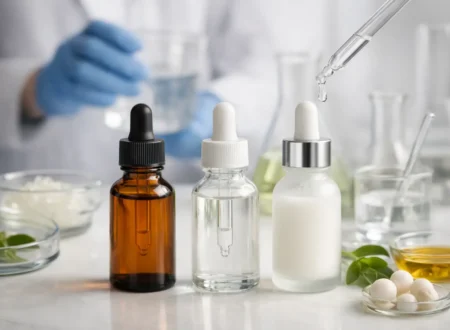
This is the part most founders picture first, and for good reason. It is where the product starts to become real. Chemists develop samples based on your brief, selecting ingredients that suit the desired performance, texture, appearance, and manufacturing practicality.
The key phrase there is manufacturing practicality. A beautiful lab sample still needs to behave well in scale-up. Some formulas feel excellent in a small beaker but become difficult to produce consistently in larger batches. Others may look ideal at first but need refinement to improve filling performance or long-term stability. This is why sample development is rarely a one-round exercise.
A good formulation process balances brand ambition with production reality. If you want a rich, luxurious cream, that can be done – but it also needs to fill cleanly, hold its structure, and remain stable in the chosen pack. If you want a crystal-clear gel, ingredient choice and processing conditions matter even more. The best results come from collaboration rather than chasing perfection in isolation.
Step 3: Packaging and compatibility checks
Packaging is often treated like a design decision, but in manufacturing it is also a technical one. The container, pump, cap, tube, or jar must work with the formula inside it. A product that is too thick may not dispense well through a pump. A lighter formula may need tighter control to prevent leaking or mess during transit.
This is why compatibility checks matter. Manufacturers assess how the formula interacts with the selected packaging over time. They also consider practical details such as fill volume, label application, line efficiency, and final presentation. Premium packaging can elevate a brand, but it should also support production consistency.
For founders, this is one of the most useful places to lean on manufacturing expertise. A package that looks impressive online but creates filling issues in production can cost time and momentum. The goal is not just a beautiful shelf presence. It is a complete product experience that works from the first batch to repeat production runs.
Step 4: Pre-production planning
Before full manufacturing begins, there is a planning phase that often gets overlooked. This includes confirming formula specifications, ingredient availability, packaging components, production scheduling, and documentation required for the run.
This stage is where experienced contract manufacturers make a major difference. Strong planning reduces surprises. If one packaging component has a longer lead time, the schedule can be adjusted early. If a formula requires a specific processing sequence or temperature control, that is built into the run plan. Good planning protects launch dates and helps avoid rushed decisions.
For growing brands, this stage also creates a foundation for future scale. Once a product moves beyond a small launch batch, repeatability becomes critical. You do not want each run to feel like starting over.
Guide to cosmetic manufacturing process in production
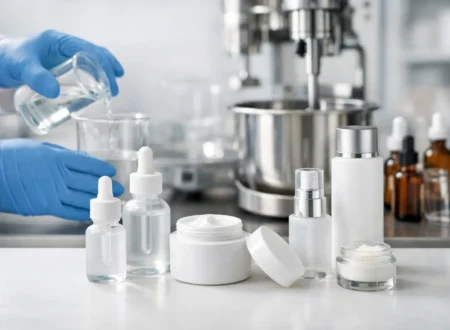
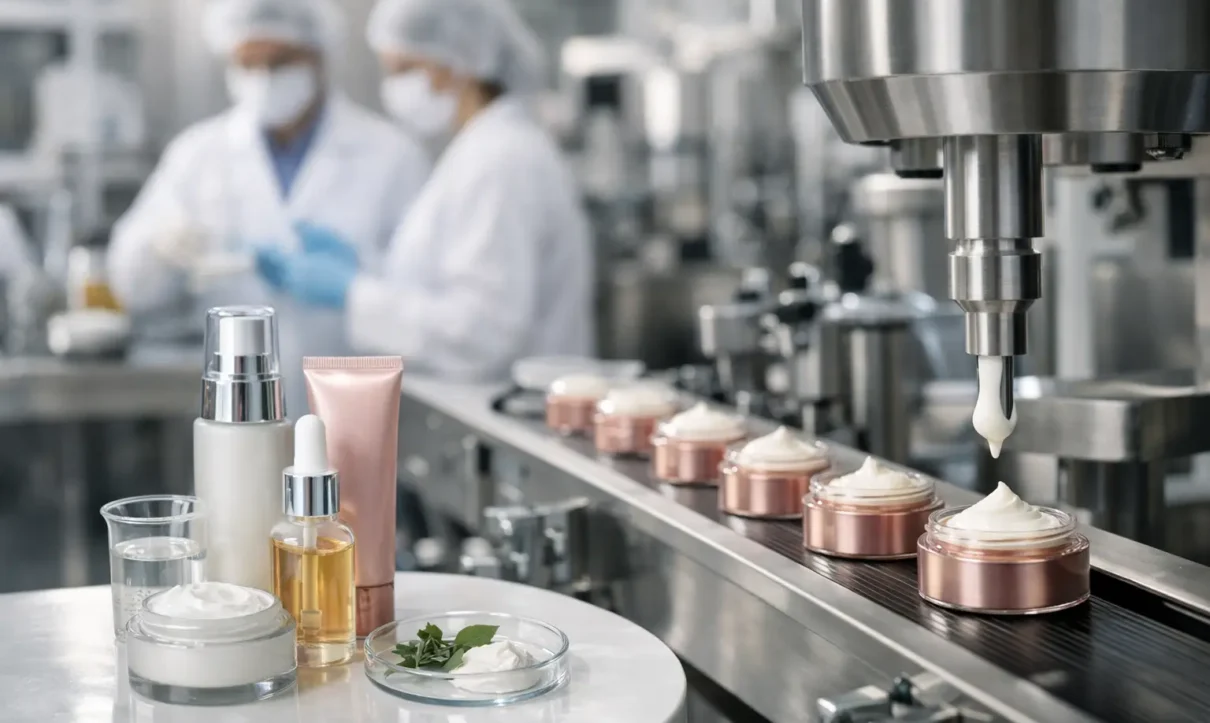
Production is where precision takes over. Ingredients are weighed according to the approved formula, then processed in a defined sequence using manufacturing equipment designed for consistency and control. Depending on the product, that may involve heating, cooling, mixing, homogenizing, or vacuum processing to achieve the required texture and finish.
This is not simply a matter of putting ingredients together. The order of addition, mixing speed, batch temperature, and hold times can all affect the final product. A face cream that feels silky and uniform depends on process discipline as much as ingredient selection. So does a shampoo with the right viscosity or a serum that stays visually clean and stable.
For brand owners, this is where the value of modern equipment and trained production teams becomes obvious. Skilled manufacturing reduces batch variation and supports a more reliable customer experience. When your first customers reorder, they expect the second unit to feel like the first.
Filling, labeling, and final assembly
Once bulk product is approved, it moves into filling and assembly. This step sounds straightforward, but it can influence both appearance and efficiency. Fill accuracy, cleanliness, cap application, label placement, coding, and carton assembly all shape how the finished product presents in market.
A premium formula can lose impact quickly if the final pack looks inconsistent. That is why detail matters here. Clean lines, accurate fills, and polished assembly support the kind of trust beauty brands work hard to build.
This stage also benefits from practical thinking. Some packaging formats offer a strong luxury feel but require slower line speeds or more manual handling. Others are more production-friendly but may not align with your brand positioning. The right choice depends on your goals, launch size, and how you want the product to sit within your broader range.
Quality control is not a final step
If there is one misconception worth clearing up, it is this: quality control is not something that happens only at the end. In a well-run operation, quality checks are built throughout the cosmetic manufacturing process.
Raw materials are verified before use. In-process checks help confirm the batch is tracking correctly during manufacturing. Finished products are reviewed for appearance, fill, labeling, and specification alignment before release. This layered approach helps protect consistency and reduces the chance of issues slipping through unnoticed.
For founders, quality control should feel reassuring, not mysterious. It is one of the clearest signs that your manufacturer is thinking long term about your brand, not just the current batch.
Choosing the right manufacturing partner
A strong guide to cosmetic manufacturing process would be incomplete without this point: the process is only as good as the partner managing it. Brand owners need more than a production line. They need a team that can translate a concept into a launch-ready product with precision, transparency, and practical guidance.
That means asking how formulation support works, how production is planned, how quality is monitored, and how the manufacturer handles repeat runs as your brand grows. The right partner should make the process feel clearer, not more complicated.
For Australian beauty founders building skincare, haircare, or beauty products, working with an experienced contract manufacturer such as GlowSense can shorten the learning curve and strengthen the final result. When formulation development, manufacturing, and quality control are aligned under one roof, your brand is in a better position to launch with confidence and scale with consistency.
If you are ready to bring your brand’s vision to life, contact GlowSense for a free quote or consultation. The right process does more than make a product – it gives your brand something even more valuable: a strong start you can build on.