
 By
By A lot of beauty founders reach the same fork in the road earlier than they expect. They have a product idea, a brand mood board, maybe even packaging concepts – then the real question shows up: private label vs custom formulation. That choice affects your launch speed, your margins, your brand story, and how easy it will be to scale once demand starts building.
For some brands, private label is the smartest way to enter the market fast with less complexity. For others, custom formulation is what creates the differentiation they need to stand out in a crowded skincare, haircare, or beauty category. The right answer is rarely about what sounds more impressive. It is about what fits your stage, budget, timeline, and long-term brand vision.
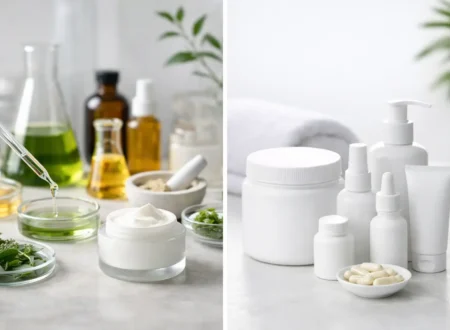
Private label vs custom formulation: what is the difference?
Private label means you start with a manufacturer’s existing base formula or ready-developed product. You then adapt the product for your brand through packaging, labeling, and sometimes limited adjustments such as fragrance, texture, or format depending on the manufacturing setup. It is a proven route for founders who want to move quickly and reduce development risk.
Custom formulation means creating a product specifically for your brand from the ground up, or developing a substantially unique formula tailored to your brief. That process usually involves concept development, ingredient selection, lab work, stability considerations, revisions, testing, and scale-up planning. It takes more time, but it gives you more control over how the final product performs, feels, and supports your market position.
This is where many new brand owners get stuck. They assume private label is basic and custom is premium. In reality, both can be premium when handled well. The difference is less about quality and more about originality, development time, and strategic fit.
When private label makes the most sense
Private label is often the strongest option for brands that want to validate demand before investing heavily in product development. If you are launching your first collection, entering a familiar category, or testing how your audience responds to your brand positioning, a well-made private label product can help you get to market with less friction.
It also works well when speed matters. Trends move fast in beauty. If your brand has a clear niche, a strong visual identity, and a sharp marketing plan, launching sooner can be more valuable than spending months refining a fully bespoke formula. In many cases, founders win because they execute well, not because they spent the longest in development.
There is also a practical advantage in choosing a formula that has already been developed and manufactured successfully. That can mean fewer unknowns during early production and a smoother path into repeat runs. For startups balancing packaging, compliance labeling, customer acquisition, and cash flow, that simplicity matters.
Private label is especially useful if your real differentiator is brand experience. Think curated product bundles, elevated packaging, strong community building, or a focused niche such as salon retail, giftable body care, or simple everyday skincare. Your customer may care more about the total brand feel than whether your cleanser was built from a blank lab brief.
When custom formulation is worth it
Custom formulation becomes far more attractive when your product is the brand. If your strategy depends on a distinct texture, a signature sensory experience, a specific ingredient story, or a formula designed around a tightly defined customer need, custom development can give you a meaningful edge.
It also makes sense for founders who already know the market well. If you have tested products, gathered customer feedback, and identified a gap that existing options do not meet, custom formulation lets you build with intention instead of compromise. That could mean creating a lightweight moisturizer with a very specific finish, a scalp serum that fits your line architecture, or a lip product with a texture profile you cannot find off the shelf.
Established brands often choose custom formulation because they need consistency across a broader range, or because they want to evolve beyond products that competitors can access through similar channels. As a brand grows, exclusivity becomes more valuable. A unique formula supports stronger positioning, better storytelling, and greater control over future line extensions.
Still, custom does not automatically mean better. A custom product only creates value if the concept is clear and the development process is disciplined. Without that, founders can spend more time and money chasing vague ideas that do not improve the final product enough to matter to customers.
The real trade-offs behind private label vs custom formulation
The biggest trade-off is speed versus specificity. Private label usually gets you moving faster. Custom formulation usually gives you more brand ownership. Neither benefit exists in isolation.
With private label, you may have less room to create something truly one-of-a-kind. If your category is highly saturated, that can make it harder to claim a distinct position unless your branding and customer experience are exceptional. On the other hand, you gain momentum and reduce the complexity that slows many early-stage launches.
With custom formulation, you gain creative and strategic control, but you also take on a longer development timeline and more decision-making. There may be multiple rounds of revisions before the formula feels right. Packaging compatibility, filling behavior, fragrance balance, and scale-up performance can all affect the final result. That is normal, but it requires patience.
Cost matters too, even when founders do not want to lead with budget. Private label is generally the more efficient entry point because much of the development work has already been done. Custom formulation usually requires more investment up front because there is more technical work involved before production begins. That does not make custom the wrong choice. It simply means the business case should be clear.
How to decide which path fits your brand
A better question than “Which option is best?” is “What does my brand need right now?” If you are early, still shaping your audience, and eager to launch with confidence, private label may be the smartest first move. It lets you build traction, learn from the market, and generate sales data before expanding into more customized products.
If you already have a defined customer, a clear product gap, and a strong point of view on what the formula must deliver, custom formulation may be the better investment. It can help bring your brand’s vision to life in a way that feels intentional, premium, and harder to replicate.
It also does not have to be all or nothing. Many successful beauty brands use a hybrid approach. They launch with private label in some categories for speed and operational efficiency, then invest in custom formulation for hero products where differentiation matters most. That approach can protect cash flow while still building a stronger long-term product story.
Questions worth asking before you commit
Before choosing between private label and custom formulation, get honest about your priorities. Do you need to launch quickly, or do you need to create something highly specific? Is your marketing strong enough to sell a proven product through a fresh brand lens, or is your growth strategy built around a formula customers cannot get elsewhere?
You should also think about internal capacity. Custom development asks more from the founder or product team. Feedback cycles, sample reviews, and decision-making all take time. If your team is lean, private label may create a cleaner path to market without stretching resources too thin.
Most importantly, choose a manufacturing partner that will guide the process clearly. The right partner does more than make products. They help translate your brand idea into a commercially sensible path, whether that means starting with a refined private label range or developing something custom with precision and care.
At GlowSense, that partnership mindset is central to how beauty brands are built – with practical guidance, premium standards, and formulation support that matches where your business is now and where you want it to go next.
The smartest launch is not always the most complex one. It is the one that gives your brand room to grow with clarity, confidence, and products your customers will want to come back for. If you are weighing private label against custom formulation for your skincare, haircare, or beauty line, contact GlowSense for a free quote or consultation and let’s map out the right path for your brand.